WGuard Co-founder Resul Biberoğlu explained the characteristics and benefits of inventory management in the digital world, as well as the services WGuard offers.
Biberoğlu stated the following:
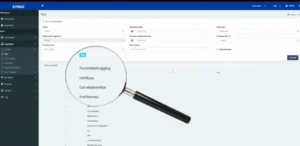
“First, I would like to discuss the possibilities and the path forward, starting with the inventory discovery phase. I am referring to a framework—or rather, a unified platform—that integrates license, software, and hardware management, along with the associated contract management. What does this entail? It begins with identifying hardware assets, tracking end-of-support and end-of-sale dates, and mapping the interdependencies between these components. Once we identify the assets, we also locate the software running on them; this involves managing licenses and optimizing usage—determining which functions are essential and identifying where usage might need to be scaled up or down.Mapping the interdependencies of these discovered assets is, in essence, a distinct concept. The crucial element here is the dependency map of the assets within your infrastructure. Let me give an example: consider a cluster consisting of two nodes. We map the interdependencies of everything associated with that cluster—such as the SQL instance, the specific storage disks utilized, firewalls, load balancers, and physical data center locations. Conversely, we can look at a cluster running on an operating system and track details like location, the specific OS pool in use, and component interactions. I am describing a platform that allows you to manage all of this from a single dashboard. This platform delivers significant benefits regarding business continuity, disaster recovery, and keeping your infrastructure up to date.” Here is what we can do: suppose you have two data centers—a production site and a disaster recovery site. We can map out the configuration on the production side, do the same for the disaster recovery site, and easily highlight the differences between them. From a business continuity perspective, we can determine whether the setup at the disaster recovery site mirrors the production site or identify what might be missing. We provide a unified platform that manages these maps and supports business continuity. Visualizing these configurations side-by-side also opens up new avenues for security management. Consider the challenge of identifying and managing unknown elements within your security landscape: you might have 100 machines in your infrastructure and see 100 active units, but if a security tool detects only 95, it becomes difficult to determine why the other five are missing—whether the agent isn’t installed or the service isn’t running. After all, you cannot manage an environment you do not fully know—whether from a security standpoint or otherwise. Therefore, it is essential to keep your inventory up to date and address any associated security vulnerabilities. For instance, while you might keep antivirus software updated on your core systems, maintaining those updates across end-user devices or diverse platforms can be challenging. We need a platform that helps us answer questions like, “Do we even know these assets exist?” or “Are we proceeding with full visibility?” Ultimately, such a platform reveals whether your infrastructure is outdated, incomplete, or contains various vulnerabilities. Suppose you have 1,000 servers, with 900 of them fully up-to-date; what risks do the remaining 100 pose if a vulnerability exists? It is often difficult to grasp the full implications when various internal security vulnerability tools flag these issues, but this is where we step in: with our WGuard solutions, we provide you with a roadmap. Essentially, it is a tool that ensures your infrastructure remains current—monitoring whether those 100 machines are up-to-date and tracking the necessary actions required to maintain that status.
About the Wise