Solmaz & Kofana: A Salesforce Success Story in Logistics
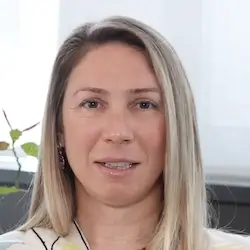
Solmaz Logistics Managing Director Billur Barlin, along with Hüda Büşra Ulutekin, Jale Tümen, and Emre Turhan, discussed Solmaz’s Salesforce success story in logistics. Barlin, Ulutekin, Tümen, and Turhan stated the following:
Billur Barlin: Salesforce essentially enabled business units to work together more synergistically. Because now all our information is gathered in one place, and everyone can access the same information and data.
As Solmaz, we are a company that produces integrated logistics solutions. We have been in the sector since 1978. This includes international transportation, customs services, warehouse management, domestic transportation and distribution, and express delivery services.
Hüda Büşra Ulutekin: One of the most important reasons we chose Kofana was its experience in the logistics sector. The application of this experience during the project’s analysis phase made the project more efficient.
Why did you choose Kofana?
Billur Barlin: One of the biggest factors in choosing Salesforce was the consulting process. While working with Kofana on the consulting side, we entrusted the project to them with great confidence in terms of process improvement. We then integrated all the universal processes they offered us internally, adapting them to the logistics sector and Solmaz. Because we didn’t just want to improve the system; we wanted to improve the processes as well. So, together with Salesforce’s consultants, we first reviewed our processes. While reviewing the processes, we also benefited from the advantages created by the system.
How did Salesforce’s integration with your ERP and operational systems contribute to your digitalization strategy?
Hüda Büşra Ulutekin: In 2024, we included Salesforce, which is strong in integration capabilities, in our digitalization journey. In the same year, along with our ERP migration project, we established an integrated structure between our operational applications, our ERP system, and Salesforce. Currently, quotes generated through Salesforce are transferred to our operational applications as orders, and after the operation is completed, the resulting invoice data is simultaneously reintegrated into Salesforce. Collecting and measuring data in a single platform has strengthened collaboration between teams. Salesforce’s integration with our systems has contributed to our digitalization vision, paving the way for more efficient management of our business processes.
What are the gains achieved with the Salesforce processes you developed with Kofana?
Billur Barlin: With the Salesforce processes we developed together with Kofana, we were able to operationally integrate all business units while simultaneously tracking their performance individually and holistically. We are currently enjoying the convenience of being able to present the data everyone has entered into Salesforce and the data they have used to their customers, while also tracking who interacted when, which processes they were involved in and which they weren’t, all in a timely manner.
Jale Tümen: Frankly, this transparency has significantly increased the motivation of the entire team. Everyone in the team can view on their dashboards how many customers visited, how many customers called, how many requests they handled, how many customers they invoiced – all for that day. Also, since other sales colleagues can see each other’s dashboards as percentages, we’ve created a healthy competition. This healthy competition has had a positive impact on sales teams achieving their targets.
Emre Turhan: Operationally, one of our most important KPIs is speed. Thanks to the real-time dashboards within Salesforce, we can analyze our pricing team more clearly. We can clearly report how quickly the prices requested by the field sales team are communicated to them. This reporting allows us to clearly see how the pricing team is achieving its KPIs.
What are the advantages offered by the Salesforce mobile application?
Jale Tümen: Thanks to the Salesforce mobile application, our field sales teams can take action faster. When we go to a customer, we can check in and record our conversations in the system using the voice recording system after the meeting. Thanks to this check-in process, we don’t need to use a different directions app when we want to go to the same customer again. Since the Salesforce application, within the visit notes, allows us to open the directions app for that customer again and offers us alternative ways to reach the customer faster, we arrive at our destination more quickly.
What was the impact of real-time dashboards and reporting on decision-making processes?
Billur Barlin: One of the biggest advantages Salesforce has brought to our lives is that when developing integrated logistics solutions, we can actually look at the process holistically and delve into the details of the project-based decisions using different filters. Naturally, this allows us to obtain analytical reports on KPIs, performance, or which services we offer to the customer are more prominent, which are lagging behind, and which areas require improvement.
Emre Turhan: Since we are in a digital age, we now conduct our analyses digitally. Thanks to Salesforce’s real-time dashboards, we can see our profit and loss, costs, billing, and pricing policies more clearly and actively. This puts us one step ahead in the eyes of our customers.
Salesforce’s Contribution to Business Processes
In today’s business world, companies need to prioritize digitalization and integration processes to gain a competitive advantage. In this context, a powerful CRM platform like Salesforce has become an important tool for making business processes more efficient. Solmaz Logistics, a company operating in the sector since 1978, has optimized its business processes by taking advantage of the benefits offered by Salesforce. This article will discuss the contributions Salesforce has made to Solmaz Logistics and how these processes are managed.
Integrated Logistics Solutions
Solmaz Logistics offers a wide range of services including international transportation, customs services, warehouse management, and domestic transportation. Integrated logistics solutions are crucial for the effective management of these services. Thanks to the centralized data management provided by Salesforce, all information is collected and made accessible on a single platform. This has increased collaboration between teams, creating a more synergistic work environment.
Collaboration with Kofana
Kofana’s consulting services played a significant role in the integration process of Salesforce into Solmaz Logistics. Kofana’s experience in the logistics sector greatly contributed to the analysis phase of the project and helped to make processes more efficient. During the consulting process, existing business processes were reviewed and improved with the advantages offered by Salesforce.
Digitalization and ERP Integration
In 2024, Solmaz Logistics took a significant step in its digitalization journey by integrating Salesforce into its system. In the same year, an integrated structure was established between operational applications, the ERP system, and Salesforce through an ERP migration project. This integration enabled more efficient management of business processes and strengthened collaboration between teams.
Performance and Transparency
The real-time dashboards provided by Salesforce facilitated monitoring and evaluation of team performance. Each team member could track their own performance and the performance of other team members, creating a healthy competitive environment. This transparency has increased team motivation, making it easier to achieve goals.
Analytical Reporting and Decision Making
Salesforce’s analytical reporting features have helped Solmaz Logistics make more informed decisions on a project basis. The ability to delve into details with different filters plays a significant role in identifying which services stand out and where improvements are needed. This has increased customer satisfaction and provided a competitive advantage.
Mobile Application and Fast Action
Salesforce’s mobile application enables field sales teams to take faster action. Check-in procedures and voice recording systems during customer visits allow for quick recording of information after meetings. This contributes to more effective management of customer relationships.
Summary
Solmaz Logistics has made its business processes more efficient by leveraging the advantages offered by Salesforce. Collaboration with Kofana, digitalization and ERP integration, performance monitoring, and analytical reporting have increased the company’s competitive advantage. Salesforce’s transparency and swift action capabilities have boosted team motivation and ensured customer satisfaction. These processes contribute to Solmaz Logistics’ stronger position in the digital age.
About the Wise