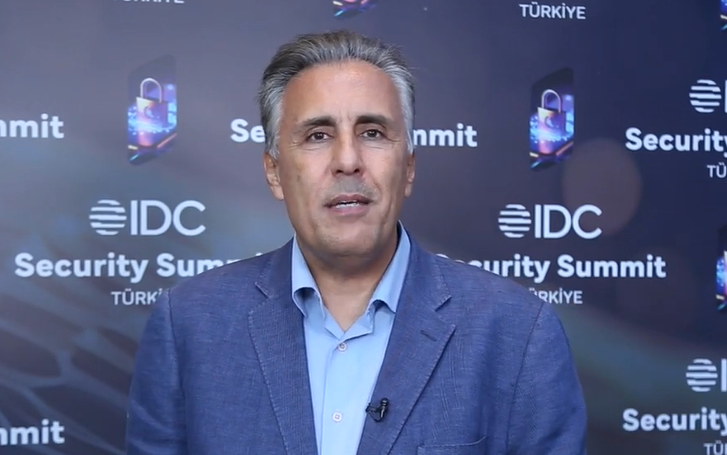
Lostar General Manager Murat Lostar answered the question “How should companies protect themselves from the risks of artificial intelligence?” in an interview with Wise TV.
Lostar stated the following:
“With the expansion of artificial intelligence, including agentic AI and similar structures, in the last quarter of 2025 and in 2026, we are actually facing a very new structure. Companies are evaluating and trying different strategies regarding ‘What will we do against artificial intelligence?’ We are also observing what different companies are doing. Which one is ideal? It’s difficult to say. There may be differences for each company and each industry. But I want to briefly go over the preferred strategies. As an individual, what surprises me most is the ‘AI is forbidden’ strategy. There is a strategy that completely shuts it down, completely bans it, tries to shut it down technically, and says ‘Your use of AI is forbidden’ as a rule or policy. This is not practically possible. Because individuals inevitably use it with their own devices, their own phones, and other personal devices. And they will continue to use it.” But here, organizations tend to bury their heads in the sand, so to speak, hiding like ostriches. It’s a strategy. I understand that. Okay. But I have to admit it doesn’t work very well in practice. My personal observations show that companies that choose this strategy don’t stay with it for very long. The second strategy is, “I’ll restrict it, give only one option, keep it under my control.” This is perhaps my favorite strategy. When we completely ban something, employees, individuals, people need to satisfy that hunger in some way. So there’s nothing you can do against that. But I’ve agreed to a corporate big language model. I even gave them access to company resources, emails, calendars, and files, if necessary. So, the strategy of “when you ask a question, you can get an answer in this direction” is perhaps the best. Because they are protecting themselves commercially. In accordance with the contract they made with the AI company, there is a structure that prevents this data from falling into the hands of third parties, other companies, competitors, or others. And they are also giving their employees a structure. However, the main problem here is: Does the AI model they chose support this? Because, slowly but surely, it’s becoming de facto in the world; just as when we said search engine, a company came to mind, when we say AI, a lot of people think of that same thing. The moment the AI in the company finds something it can’t do, the instinct to try another one continues. Here, it becomes extremely important that employees are well-informed, trained, and that the reasons for this particular strategy are clearly explained. The third strategy is to say, “I’m not doing anything. Do whatever you want,” and leave it open. This is perhaps one of the highest risks. Because then, since we don’t know who is doing what, we see our data being scattered around in large numbers. Unfortunately, 2025 was one of the years when we saw examples of AI being hacked, and users’ data, prompts, and responses falling into the wrong hands. Followers will remember this. Therefore, preventing data from spreading everywhere is naturally very important, especially in the corporate world. It needs to be monitored. We need to discuss a fourth strategy. This involves organizations that actively engage with artificial intelligence, often preferring the second of the three strategies, while also dedicating effort, time, and money to their own AI solutions. These are firms that prioritize transformation and, as a result, we believe will gain a competitive edge in their sectors in the coming period. However, let’s not overlook the fact that a significant number of AI projects unfortunately end in failure. It’s almost certain that well-planned and managed AI projects will create a competitive advantage across all sectors.
Artificial Intelligence and Corporate Strategies: A Look Towards 2026
The last quarter of 2025 and the year 2026, with the expansion of artificial intelligence into agencies and similar structures, have led companies to develop different strategies on how to adapt to this new technology. As AI revolutionizes the business world, companies are trying various ways to keep pace with this change. However, it’s difficult to give a clear answer as to which strategy is best. Every company and industry has its own unique needs and dynamics. In this article, we will examine four main strategies that companies have developed in response to artificial intelligence. These strategies will help us understand how companies manage AI and the challenges they face in this process.
The Strategy of Banning AI
The strategy of completely banning artificial intelligence is an approach adopted by some companies. This strategy aims to completely shut down the use of AI, both technically and politically. However, this approach is not practically feasible. Employees continue to use AI through their personal devices. This strategy can be seen as an attempt by companies to avoid the change brought about by artificial intelligence, but it is not sustainable in the long run.
Restricted Use and Control Strategy
The second strategy aims for restricted use of artificial intelligence and its control by the company. This approach allows companies to offer this technology to their employees using a specific AI model. In this way, data security is ensured while employees benefit from the advantages of artificial intelligence. However, the success of this strategy depends on the capabilities of the chosen AI model.
Open Use Strategy
The third strategy is to completely unleash the use of artificial intelligence. This approach carries one of the highest risks because it can lead to the uncontrolled spread of data. In 2025, events such as AI hacking and user data leaks highlighted the risks of this strategy. Therefore, caution is needed regarding data security.
Investing in Artificial Intelligence Strategy
The fourth strategy involves actively investing in artificial intelligence. This approach allows companies to develop their own AI solutions. This strategy is ideal for companies leading the transformation and aiming for a competitive edge. However, since AI projects have a high failure rate, proper planning and management are critical.
The Future of AI Strategies
Artificial intelligence continues to create fundamental changes in the business world. Companies are developing different strategies to adapt to this change. Strategies such as banning AI, restricting its use, open use, and investing in it show how companies are approaching this technology. Each strategy has its own advantages and disadvantages. However, with proper planning and management, AI projects can provide a competitive advantage.
Conclusion
While artificial intelligence is revolutionizing the business world, companies are developing various strategies to adapt to this change. Strategies such as banning AI, restricting its use, open use, and investing in it show how companies are approaching this technology. Each strategy has its own advantages and disadvantages. However, with proper planning and management, AI projects can provide a competitive advantage. Companies need to be careful in this process and prioritize data security.
About the Wise

Similar Videos from this Wise

What advantages will AI provide to security personnel in 2025?
Murat Lostar, General Manager of Lostar, evaluated the year 2025. Lostar stated: “The important aspect of 2025 is [&hel...

With Agentic AI, our security may be at risk!
Murat Lostar, General Manager of Lostar, spoke about Agentic AI. Lostar stated: “In 2025, yes, as has been […]
What is Agentic AI?
Lostar General Manager Murat Lostar spoke about Agentic AI in an interview with Wise TV. Lostar stated: Agentic […]