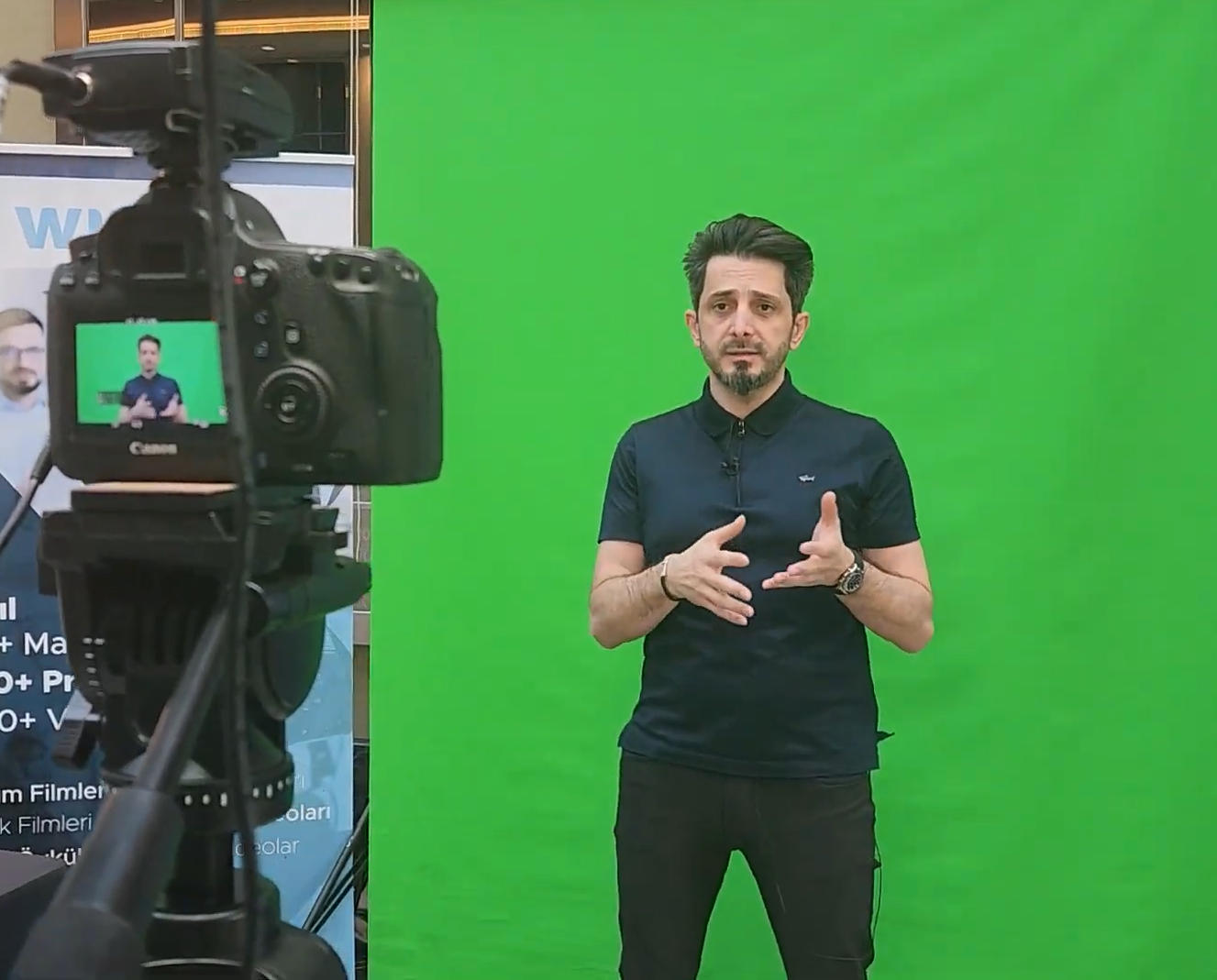
Murat Lostar, General Manager of Lostar, spoke about Agentic AI.
Lostar stated:
“In 2025, yes, as has been the case since 2023, we continued to talk about artificial intelligence very intensely. AI, as in every field, continued to leave its mark on the technology side this year as well. But very important differences began to emerge between the AI we talked about in 2023 and the AI we are talking about this year. Both in technology in general and in information security and cybersecurity. Let’s address the technology side first, then I will gladly delve into the cybersecurity side. On the technology side, when we talk about AI in general, people and employees often understood AI as large language models, LLMs, and narrow power modules. But they gradually started to realize that this was no longer sufficient, around the end of 2024 and the beginning of 2025. By 2025, large language models were no longer enough for us, neither for employees nor for individuals.” Therefore, starting in 2025, agent-based AI, or “agentic AI” as it’s called in English, began to enter our agenda very intensely. Of course, we started talking about its security. Until now, what we did was mostly through interactive writing with large language models; I would ask a question, and the answer would come. With multimodeling, I would ask verbally, and I would hear the answer. But it wasn’t possible for artificial intelligence to go and change things in other systems, to take data from other places and add data there. Therefore, in security, humans still served as a layer. When artificial intelligence acted erratically, they would say, “Come on, that’s not right,” and wouldn’t process it. But gradually, as agents are added in front of large language models, and as various processes are handled more intensively with artificial intelligence trained independently of language models, we have actually started to leave our work, decisions, and ways of doing business to artificial intelligence in large numbers. This has started to bother us security professionals a lot, because it has frightened us. The risks have started to increase. When we consider risk, we always think in two main points: What will be the impact on us if that risk – whatever it may be – materializes? That’s the first part. And what is the probability of it happening? So, impact and probability. Looking at this, we see that the impact of AI’s negative actions has increased significantly because of the ability to perform automated processes thanks to agents. Also, because we’ve removed humans from the equation, we see that the probability is also increasing. Yes, AI is evolving, language models are improving, new models are emerging, everything is improving. It’s even getting better. However, it’s still not perfect. It can still make mistakes. We’re still in a period where it’s dangerous to expect a human mind, a human intelligence, to look at it and say, “Something is wrong here.” Therefore, some institutions are implementing different measures and cancellations against AI. On the other hand, people want to use it more. Companies ban it, but people use it on their mobile phones. Thanks to multi-modeling, even if companies ban it, they don’t even have to type on their screens. They take a picture of their screen and ask the AI. But without knowing it, without realizing it, they might be sending valuable company information or personal data to the AI. The risks here continue to increase. We, as security professionals, are trying to combat this through awareness and technological solutions.
Artificial Intelligence and Technological Advancements
As we approach 2025, artificial intelligence technologies continue to develop rapidly. Since 2023, the impact of AI has been felt in every field, and technological innovations and changes are also noteworthy. While large language models have become one of the cornerstones of artificial intelligence, agent-based structures have also begun to emerge. These developments push the boundaries of technology and offer new possibilities.
The Evolution of Large Language Models
Large language models are considered one of the most important components of artificial intelligence. However, by 2025, the adequacy of these models began to be questioned. Employees and individuals began to seek more complex and effective solutions. At this point, agent-based structures came into play, offering a more dynamic and interactive artificial intelligence experience.
Agent-Based Structures and Their Effects
Agent-based structures enable artificial intelligence to operate more autonomously and effectively. These structures go beyond large language models and can perform more complex tasks. However, this also brings new security risks. The autonomy of artificial intelligence, while reducing human intervention, can lead to an increase in potential errors and risks.
Information Security and Cybersecurity
The development of artificial intelligence has also led to significant changes in the field of information security and cybersecurity. Agent-based structures create new threats to data security. The ability of artificial intelligence to make changes in other systems worries security experts. Therefore, security measures and awareness campaigns are of great importance.
Risk Management and Probabilities
Risks related to artificial intelligence are evaluated under two main headings: impact and probability. Thanks to agent-based structures, while the impact of artificial intelligence increases, the decrease in human intervention also increases the probabilities. This situation leads security experts to be more careful and develop new strategies.
Organizational Measures and User Behavior
The increasing use of artificial intelligence is causing organizations to take different measures. While some companies are limiting the use of artificial intelligence, users are looking for ways to overcome these limitations. Thanks to multimodal technologies, users can use artificial intelligence more effectively. However, this also brings with it data security risks.
Looking to the Future
As artificial intelligence technologies continue to develop rapidly, security and ethical issues are also gaining importance. Agent-based architectures and large language models will offer more interactive and autonomous systems in the future. However, managing these developments securely is of great importance for both individuals and organizations.
While artificial intelligence continues to be at the forefront of technological advancements, security and ethical issues must also be considered. Agent-based architectures and large language models will offer more interactive and autonomous systems in the future. However, managing these developments securely is of great importance for both individuals and organizations. The opportunities and risks presented by artificial intelligence technologies must be carefully evaluated.
About the Wise

Similar Videos from this Wise

How can companies protect themselves from the risks of artificial intelligence?
Lostar General Manager Murat Lostar answered the question “How should companies protect themselves from the risks of ar...

What advantages will AI provide to security personnel in 2025?
Murat Lostar, General Manager of Lostar, evaluated the year 2025. Lostar stated: “The important aspect of 2025 is [&hel...
What is Agentic AI?
Lostar General Manager Murat Lostar spoke about Agentic AI in an interview with Wise TV. Lostar stated: Agentic […]
Is the security of critical infrastructure adequate?
Lostar General Manager Murat Lostar evaluates the cyber security level of production facilities and critical infrastructures...